July 18, 2011

Hollywood Academy Delegation Meets Kibera Film School. WooH!


Kibera Film school was privileged to host a delegation of filmmakers from hollywood who came to Kenya for the Film Africa Workshops. Before they came to the school some of the students had the opportunity to attend their screening and the Q&A sessions at the silverbird cinema in prestige plaza Ngong road. During this time they were able to teach and also just show how the films were made and the audience would ask questions. They came with them the richness of hollywood and we actually felt like hollywood was in kenya.

The delegation included -:


 Alfre Woodard: 

Actress who has won almost 26 award in the film industry. She is known for films like A Family That Preys and Crooklyn a legendary film she stirred in 1994.

She first made her debut in this industry in 1974 and since then she is considered to be one of Americas most talented and one of the most successful actress.
Her visit to the film school really inspired many who really look up to her as a role model. Just having her watch the films we had made and actually giving back positive feedback overwhelmed us. Her personality too stood out. Our doors are always open for you and we look forward to seeing you again.


    Carol Littleton:

Carol Has been editing major hollywood features from as early as the 70's. She first stumbled into the industry as an assistant editor and since then she never left the editing room. She has been able to win an award with her editing. Her simplicity in editing is what takes it home. she knows how to hit the emotions of the viewer and that is key in editing. She has edited films such as Country song, Muncharian Candidate etc. We were glad to have her watch our pieces and actually give positive feed back. I think this was the breakthrough moment that the school needed! Really, Hope we meet again this time in hollywood :)


Ellen M. Harrington:

She is the director of Exhibitions, Special Events and International outreach for the Academy. During her 17yrs in this post, she has organized and designed the installation for over seventy exhibitions. A great thank you for her organizing all the events such as the one that saw the academy come alive in Kenya and mostly in Kibera. Thank you again.


John Bailey:

 One of the finest cinematographer and director in hollywood. He has been in the film industry since 1971 till present. The students in Kibera Film School loved him immidiatley because of his good nature and easy to interact. He is well known for sharing the skills he has acquired with the youth and is one of the mentors in the Kodak and UCLA. He is a member of the American Society of Cinematographers since 1985 and is also member of the jury in Venice Film Festival in 1987. Hope you come back and mentor us too


    Phil Alden Robinson:

A film director and a screenwriter. He has won a writers guild of America award and an oscar for the best screenplay adaptation.He was named the screenwriter of the year in 1990.He is currently the vice president of Academy of Motion Pictures Arts and Sciences. Inspiration and hope is what you brought with you in Kibera Film School and we are proud that you paid us a visit. Your appreciation of what we do here lays humbly beneath our hearts. And the dream continues............... All the writers here in the school are putting their thoughts together. Thank you for coming, It meant a lot for us.


  Stephanie Allain:

Has come along way. She began her carreer as a script reader in the industry and now she is one of Pioneers in the industry and now the president of Homegrown Pictures. She has been produced El Mariachi, Black Snake Moan among other films. Your success is indeed an inspirational story that gave the youth of Kibera Film School hope. Nothing is ever really lost if you work towards it. That was a lesson well learnt and we the Students of Kibera Film School HOPE that we get there too. Asante Sana!


 Wynn Thomas:

Started working in the theaters as a teenager. He became an assistant art director on such films as The Cotton Club, The Money Pit and Brighton Beach Memoirs. And has been the Art director in Breach, Analyze this, Get Smart etc just to name but a few.
He is said that he could turn anything into whatever that is needed. Just watching some of the sets he had designed was really cool. He spells success at what you do and that is exactly what we needed at this moment.You inspired us.


      Willie Burton:

The sound engineer. Two time oscar winner for sound. Is the first black to actually be accepted in the International Sound Technician Union making him one of the pioneers in his field. He has done sound for films such as the Shawshank Redemption, Which actually is an excellent film and Dream girls which also bagged him one of his Oscar award. He trained as an electronic technology and engineering which first him a job at the navy.


 Mercy Murugi, The director of Kibera Film School and a trustee of Hotsun Foundation together with Alfrie Woodard at the Hotsun foundation Premises.
This was a great moment for  everyone including our trustees who facilitated the whole event. Kudos and Thumbs up for all of you.


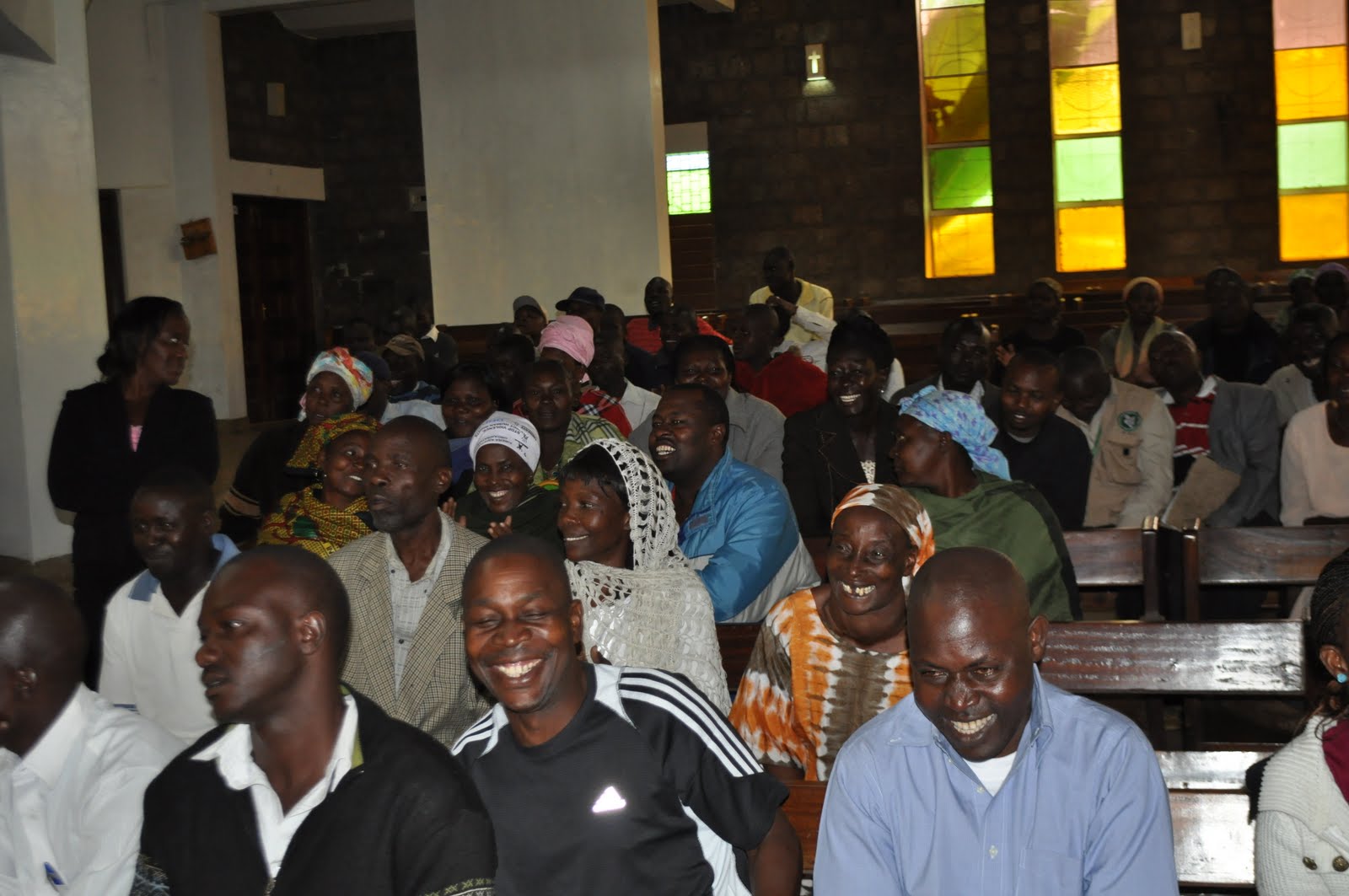
And it was time for a group Photo with everyone in the school and nobody wanted to miss out on this rare memorabilia. A chance that got us to meet Hollywood's finest. And so everyone grabbed a spot. Forever we shall cherish this moment its written in our hearts and minds too.


This was a good experience for the  film student and interns at the foundation. It is with deep gratitude that we want to thank the Guests for taking their time off the busy schedule just to be able to be there and share with us. Indeed we are humbled and we want you to come back again, Welcome and Karibu sana. And to the Trustees Thanks for giving us this rare opportunity. Thank you so much.


To support the great youth of the Kibera Film School, please visit our Global Giving Page

July 12, 2011

Working on the set of Guerilla Boy: Alice's, Wicky's and Vinny's experiences.


VINCENT ODUOR: "I worked as the set runner and third assistant director. I called the shots, arranged for the scenes and supervised other departments.
I learnt to distinguish between various assistant directors. For example, the second assistant director ensures that the cast gets on set in time. This director does the paper work and handles the crew’s schedule.
On the other hand, the third assistant director not only controls the background movement of a scene but also keeps the pace of the shooting time. In addition to this, the third assistant director directs the extras in a scene. As the right hand person of the first assistant director, he ensures that the cast is around for the next scene.
Working on the set of Guerrilla Boy taught me to relate the theories of filmmaking to the practical realities of the field. Due to the constructive criticism offered by the people I worked with, I strengthened my resolve to become a filmmaker."


ALICE MOTIERI: "I worked on stills and downloaded, copied and digitalized videos from the Red One hard drive.
Working on the set of Guerrilla Boy taught me valuable lessons on sound recording and working with the mixer. I also learnt how to write continuity notes as well as how to relate with other members of cast and crew.
I got the chance to integrate film theories into a real film set, and realized that in filmmaking, passion and risk-taking are crucial.
Filmmaking is not all glamour, though. Working in Nderi came with its own set of peculiar challenges, the first of which was cold biting weather. Also, we had a few hiccups with the transportation from Nairobi to Nderi. Other problems arose in the form of misunderstandings with other crew as to job description and duties, as well as in the form of missing or misplaced equipment.
However, I made valuable networks during the twenty one days spent at the set and realized that, without a doubt, film is the career for me.”
WYCLIFF MBOYA:

 “On the set of Guerrilla Boy, I worked with different types of lights and dealt with the setting and the pushing of the dolly. I got the chance to hobnob with some of the who’s who of the film industry. I came to realize that there are lots of people involved in the making of a successful film. The director cannot do without the grips people. The actors and actresses cannot do without the film crew. Everyone is interdependent.
From working on the set of this film, I sobered up from my romanticized ideals of the film industry. I woke up to the realization that film is not just what they show you on television; lots of sweat, tears and blood go into each successful production.”

To support the great youth of the Kibera Film School, please visit our Global Giving Page

Our new home - Still in Kibera though!

We have recently discovered WordPress. Not true... we knew about it, we just did not know how cool it was.

Now that we do, we have moved house. It's still us, we are still in Kibera, but our online home is now here

Hot chapatis and mandondo (beans) waiting!


To support the great youth of the Kibera Film School, please visit our Global Giving Page

May 23, 2011

MEMBERS OF PARLIAMENT LISTEN TO VIEWS OF KIBERA RESIDENTS ON THE ISSUE OF THE ECONOMIC CRISIS

 A resident of Kibera giving out his views on how the government can revive the economy.


Hon. Ababu Namwamba addressing Kibera residence.
To support the great youth of the Kibera Film School, please visit our Global Giving Page

May 16, 2011

BUSY DAY IN KIBERA FILM SCHOOL.

To support the great youth of the Kibera Film School, please visit our Global Giving Page


Stephen Okoth preparing the land ready to plant the flowers during the  general cleaning day at the school.


 Jefferson Oroka, electrician checking the meter box during the general cleaning day at the school


Moses Ouma and Berry Muga both students of Kibera film school carrying garbbage.   


Josephat Keya the project  manager arranging the flower pots inorder. He also urged the students to always keep the school and its environs clean adding that cleanliness is always secondliness to God.


The stuff they don't show you on television

Movie-making is very easy, right? All you do is grab a camera –a phone even- and switch it on, place your target in front of you, make them do something and then mount the footage on YouTube. No budget, really, unless you count the modem or cyber fees for uploading the footage on YouTube. No work, either, right?
You have no idea! Did you know that the drama that goes on behind the scenes could make an entire series on its own? In fact, some Hollywood Cyber sentinel has spotted this blogpost and made a studio call already.
He’s probably saying; “Hello, Mr. Film Director, I just stole this intellectually confounding idea off of the Kibera Film School site, about making a series out of the behind the scenes footage. Really, why didn’t we think of this before?" Seriously, they make serieses out of people staring at potted plants. And those sell!
So, this is the stuff they don’t show you on television and which we are going to show in the new Behind the Scenes series (we see you, idea-stealing Hollywood Cyber Sentinel):
Whenever we shoot around Kibera, we are followed by hordes of curious spectators. These people are so impatient they can’t wait for the movie premiere; they have to watch it on the set. For your own movie-watching safety, don’t talk to these people unless they have ‘Spoiler Alert’ disclaimer labels across their foreheads.
There are those spectators that come to the camera person and demand to be shot too. They say that whatever the cast is doing, they can do better. Serious negotiations begin. Sometimes the serious negotiations don’t stop until there’s a steady pounding of pain in the camera person's head.
Then there are those people who make a steady living out of watching the shooting of films. If you set up the tripod on the grass, you have to pay them. If you look at a goat, you have to pay them. If you breathe the air, you have to pay them. If you ask for directions, you have to pay them. In fact, now that we think about it, that’s such a business plan! We’ll be setting up the tripod and mounting the camera, then paying ourselves for looking at the goats and breathing and stepping on the grass. We won’t have to work another day of our lives!
The paranoid people come flailing hammers and toothpicks because the camera blinked instead of closing its eyes. They ask, “Why is it looking at me like that? What are the camera’s intentions?” So, this is a public service announcement: Our cameras are good people. They aren’t looking at you perversely. They only have good intentions in their hearts.
It can take hours to shoot just one scene. One episode has many scenes, and one season has many episodes. It takes endless standing, hunching under the weight of gruesome equipment, screaming your voice hoarse and bloodying your scalp with razors to bring your favourite show on the screen. Oh wait, there’s also the deafening growls issuing from your neglected stomach.  
It’s a tough job, but someone’s got to do it. I know, I know, that’s a cliché line. If you know any film or television crew, give them a pat on the back. They deserve it.

To support the great youth of the Kibera Film School, please visit our Global Giving Page


It's not just a name welcome and learn the art of filmmaking. Our training is hands-on.